GCAA CBTA  ·  Initial

Passenger and Crew Baggage Acceptance

GCAA FIT 4.1.FIATA CBTA 7.5.A1 day — 7 hours
Passenger and Crew Baggage Acceptance training at DGR Aviation, Dubai

Home / Courses / 4.1.F

Course overview

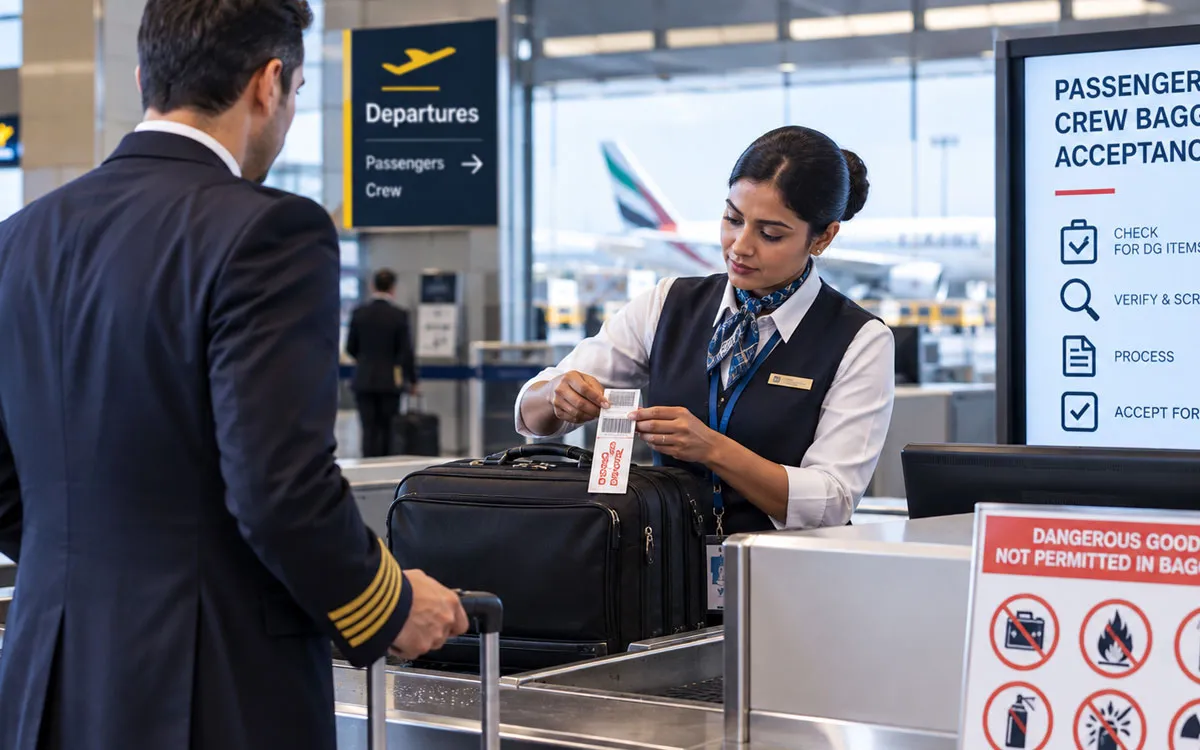
The FIT 4.1.F Initial Course is designed for personnel responsible for accepting passenger and crew baggage, managing aircraft boarding areas and performing other functions involving direct passenger contact at an airport.

The course provides participants with the knowledge required to identify dangerous goods carried by passengers or crew and to apply the relevant acceptance, restriction, approval and reporting procedures in accordance with GCAA requirements and the latest IATA Dangerous Goods Regulations.

Who should attend

  • Passenger check-in personnel
  • Passenger-service agents
  • Boarding-gate personnel
  • Airport customer-service staff
  • Baggage-acceptance personnel
  • Transfer and transit-desk personnel
  • Airline ticketing and reservation staff
  • Airline and Ground Handling Agent personnel
  • Airport-operator personnel
  • Personnel assisting passengers with baggage
  • Supervisors responsible for passenger-handling operations

Course objectives

Upon successful completion, participants should be able to:

  • Understand the basic principles of dangerous goods regulations
  • Recognise the nine classes of dangerous goods
  • Identify dangerous goods that passengers and crew must not carry
  • Apply provisions for dangerous goods permitted in checked baggage
  • Apply provisions for dangerous goods permitted in carry-on baggage
  • Identify items requiring operator approval
  • Apply quantity, packaging and protection requirements
  • Understand restrictions applicable to batteries and electronic devices
  • Identify requirements for mobility aids and medical equipment
  • Ask passengers appropriate dangerous goods safety questions
  • Recognise hidden or undeclared dangerous goods in baggage
  • Provide correct information to passengers and crew
  • Apply procedures for prohibited or non-compliant items
  • Follow incident-reporting and emergency-response procedures
  • Apply relevant state and operator variations
  • Report dangerous goods accidents and Incident
  • Report dangerous goods occurrences

About the course

Designed to provide you with the knowledge and skills necessary to safely assist passengers who are travelling with Dangerous Goods, in this course, you will learn about the different classes of Dangerous Goods, including flammable liquids, explosives, and toxic materials. You will also be trained on the procedures for dealing with Dangerous Goods incidents, emergency response and evacuation procedures. In addition to classroom instruction, the course includes hands-on training in a simulated airport environment, where you will have the opportunity to practice how to handle Dangerous Goods you have learned in a safe and controlled setting.

Often taken with

Functions most 4.1.F delegates also hold.

Frequently asked

Who needs GCAA 4.1.F training?
Personnel responsible for accepting passenger and crew baggage, managing aircraft boarding areas, and other functions involving direct passenger contact at an airport. That covers check-in agents, gate staff, transfer desk staff and customer service personnel employed by airlines and ground handling agents.
How long is the 4.1.F course?
Initial training runs 1 day at the DGR Aviation training centre in Port Saeed, Dubai. In-house delivery is available for airlines and ground handlers who need to train check-in and gate teams around shift rosters.
Why do check-in staff need dangerous goods training?
Passenger handling staff are the point at which dangerous goods like power banks, spare batteries, e-cigarettes, aerosols, camping fuel, mobility aids and sporting equipment are identified, questioned and either permitted or refused based on the IATA DG Regulations.
Does the course cover lithium batteries and power banks in baggage?
Yes. Passenger baggage provisions are core to this category, and lithium battery restrictions are the most frequently applied part of them in daily operations. Ask DGR Aviation to align the session with your airline’s current baggage acceptance policy so staff train against the rules they will actually apply.
What is the difference between 4.1.F and 4.1.J for cabin crew?
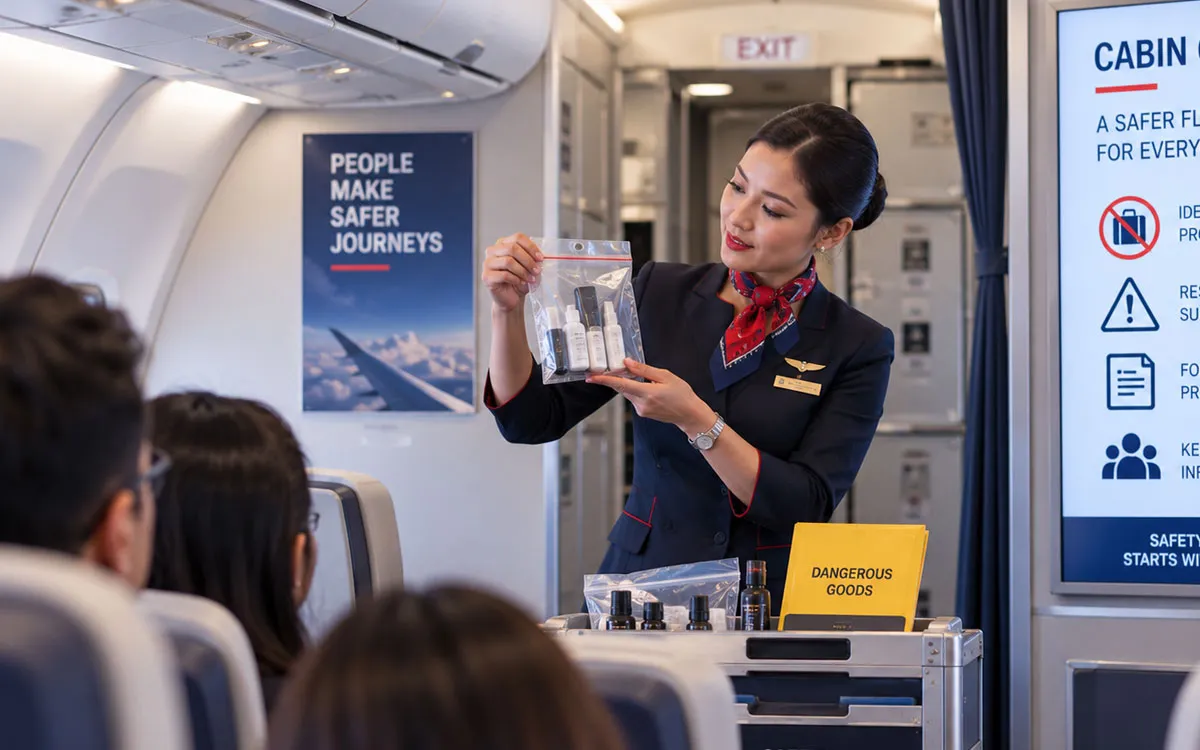
4.1.F covers staff dealing with passengers on the ground: check-in, boarding areas and direct passenger contact at the airport. 4.1.J covers cabin crew, whose responsibilities relate to items on board the aircraft and to recognising and responding to a dangerous goods occurrence in flight.
Does the 1-day course meet the GCAA requirement?
Yes. This is a GCAA-approved course.
How long is the certificate valid?
All dangerous goods training certifications are valid for two years. Airlines and ground handlers with high turnover in check-in and gate roles usually schedule recurrent sessions as a recurring in-house block rather than tracking individual expiry dates.
How do we book training for a check-in team?
Contact DGR Aviation on +971 4 267 6745 or +971 56 534 9234, or email info@dgraviation.com, with your headcount and preferred dates. In-house delivery at your airport facility can be arranged.
Can 4.1.F be delivered at our facility?
Yes. This function is regularly delivered on-site across the UAE, on your shift pattern and using your own documentation as the worked examples. The approval, assessment and certificate are identical to the classroom course.
What is the pass mark?
80% for a pass and 90% for a distinction, assessed on Knowledge, Skills and Attitude by the training provider. Where applicable, an employer assessment should be completed within 12 months.
How do I confirm this is the right function for my staff?
Use the Course Finder to map a job role to its GCAA function, or contact us and we will return a written training matrix for your team.

Tell Us The Job Functions
We’ll Name The Course.

Join a free demo class with a GCAA-approved instructor. See how the training works and find the right course for every role — no obligation, no cost.

Free Demo Class

Join a free demo class with a GCAA-approved instructor. See how the course works, understand what your role needs, and ask your questions before you book.

Where *

Prefer the full page? Open the full form

Privacy

Cookie preferences

Strictly necessary

Always on

Required for the site to function — page navigation, form submission, security, and remembering this cookie choice. They store no marketing identifiers and cannot be switched off.

Analytics

Help us understand which courses and pages people look for, so we schedule the right cohorts. Aggregated and never used to identify you individually.

Marketing

Let us measure which adverts led to a training enquiry, and avoid showing you the same advert repeatedly. Set by our advertising partners.