GCAA CBTA  ·  Initial

Shipping Lithium Batteries by Air

GCAA FIT 4.1.M3 days — 21 hours
Shipping Lithium Batteries by Air training at DGR Aviation, Dubai

Home / Courses / 4.1.M

Course overview

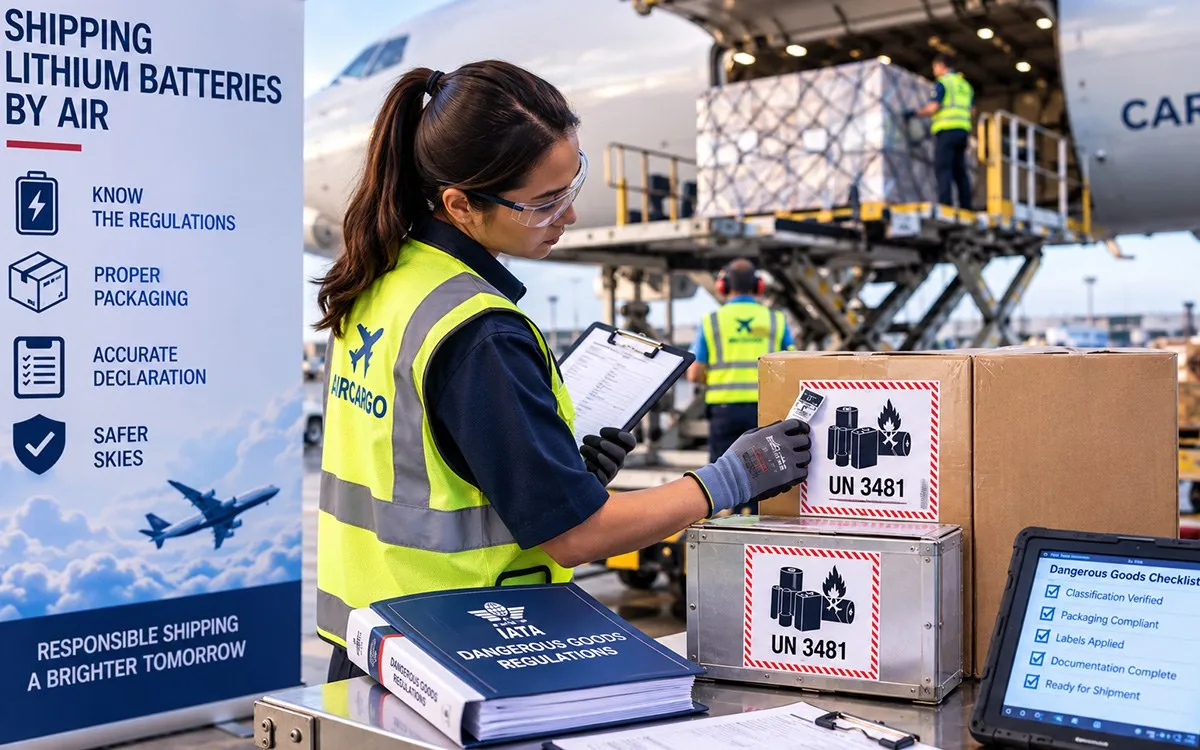
The GCAA FIT 4.1.M Lithium Battery Dangerous Goods Training – Course provides comprehensive training on the preparation, handling, storage and transport of lithium and sodium batteries by air.

The course covers lithium-metal, lithium-ion and sodium-ion batteries shipped separately, packed with equipment or contained in equipment. It provides participants with the technical and practical knowledge required to classify, pack, mark, label, document, handle and transport battery shipments safely and in accordance with applicable GCAA and IATA Dangerous Goods Regulations.

Who should attend

  • Lithium- and sodium-battery manufacturers and suppliers
  • Shippers and consignors
  • Freight forwarders and logistics providers
  • Dangerous goods packing personnel
  • Personnel offering lithium or sodium batteries for air transport
  • Cargo and mail handling personnel
  • Warehouse and storage personnel
  • Airline and ground-handling personnel
  • Quality-control and compliance-monitoring personnel
  • Dangerous Goods Post Holders
  • Personnel responsible for the supervision of battery shipments
  • UN 3090 – Lithium metal batteries
  • UN 3091 – Lithium metal batteries packed with or contained in equipment
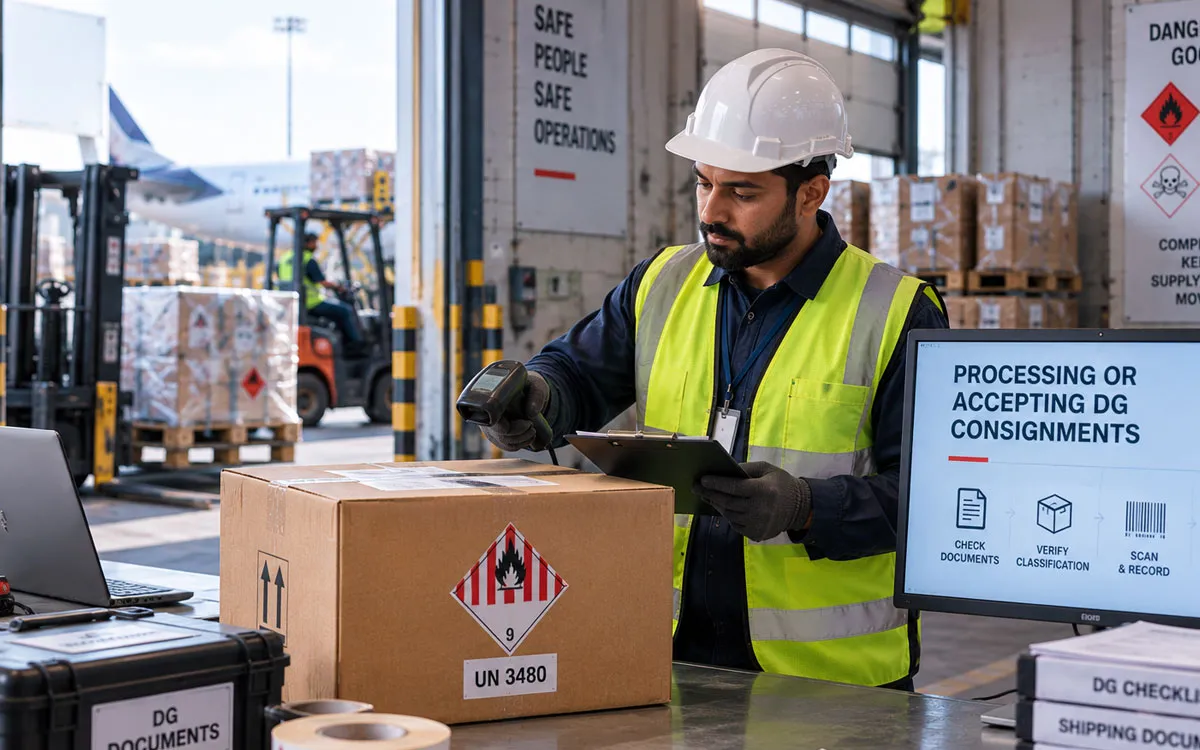
  • UN 3480 – Lithium-ion batteries
  • UN 3481 – Lithium-ion batteries packed with or contained in equipment
  • UN 3551 – Sodium ion batteries
  • UN 3552 – Sodium ion batteries packed with or contained in equipment

Course objectives

Upon successful completion, participants should be able to:

  • Understand the hazards associated with lithium-metal and lithium-ion batteries
  • Understand the hazards associated with sodium-ion batteries
  • Differentiate between UN 3090, UN 3091, UN 3480, UN 3481, UN 3551 and UN 3552
  • Identify the correct classification and shipping description
  • Understand battery types, cells, batteries and equipment configurations
  • Determine the applicable packing instruction and regulatory requirements
  • Apply watt-hour and lithium-content requirements
  • Understand State of Charge requirements and other applicable restrictions
  • Select suitable packaging for battery shipments
  • Apply the correct marks, labels and package specifications
  • Prepare and verify the required transport documentation
  • Apply applicable passenger-aircraft and cargo-aircraft restrictions
  • Recognise damaged, defective, recalled, waste and prototype batteries
  • Apply safe handling, storage, loading and segregation procedures
  • Identify hidden or undeclared lithium and sodium batteries
  • Respond appropriately to battery incidents and emergencies
  • Perform battery-shipment functions in compliance with GCAA and IATA requirements

Key topics

  • Lithium Batteries Occurrences
  • Purpose and the legal framework on why there is a need for lithium battery regulations
  • Lithium Battery Training Requirements
  • Lithium Battery Classification and Identification
  • Lithium Battery Packaging Requirements
  • Lithium Battery Marking and Labelling Requirements
  • Lithium Battery Dangerous Goods Declaration and Air Waybill Requirements

How the course runs

TrainingDuration
Initial training3 days (21 hours)
Recurrent training2 days (13 hours)

Resources during training

Workbook exercises and the UAE Civil Aviation Regulations (CAR) Part VI Transport of Dangerous Goods by Air. DGR Aviation will provide these for the duration of the training.

Class activities

Plenty of simulation exercises and case studies on various types of lithium batteries, so participants progressively apply their knowledge and skills to prepare and accept lithium battery shipments. A final assessment (theory and practical) on the last day of class assesses participants’ knowledge, skills and attitude in applying the Regulations.

Certificate awarded

A certificate is issued upon successful completion of the course. The certificate is valid for two years.

Customised / in-house training

For customised or in-house training, complete the enquiry form on this page.

Significance of lithium battery handling training

If you are involved in the handling, shipping, and/or transport of lithium batteries by air, IATA lithium battery handling training ensures compliance with the relevant regulations and guidelines. The IATA Lithium Battery Training course is designed to provide participants with the necessary knowledge and skills to safely handle and transport lithium batteries.

Whether you are seeking initial training or require recurrent training to stay up to date, the IATA Lithium Battery Training course is suitable for both scenarios. This course is particularly beneficial for individuals already trained in air transportation of dangerous goods, as it serves as a supplemental course focusing specifically on the intricacies and requirements related to shipping lithium batteries.

Successful completion of the IATA lithium battery shipping training will result in a certification that demonstrates your competence in handling and transporting lithium batteries by air. This certification serves as proof of your compliance with industry standards and enhances your professional qualifications in this specialized area.

It is important to note that regulations and guidelines governing lithium battery transportation are subject to frequent updates. Therefore, it is crucial to stay updated with the latest developments in this field and undergo recurrent training to maintain your knowledge and ensure ongoing compliance.

By undertaking the lithium battery handling training course, you will be equipped with the necessary skills and knowledge to handle, ship, and transport lithium batteries safely and in accordance with the applicable regulations and guidelines.

Often taken with

Functions most 4.1.M delegates also hold.

Frequently asked

Who should take the lithium battery air transport course?
Anyone preparing, packing, documenting, accepting or handling lithium batteries for air transport. That includes electronics and e-mobility shippers, freight forwarders, e-commerce logistics teams, cargo acceptance staff and warehouse personnel who deal with cells, batteries, power banks and battery-powered equipment.
How long is the lithium battery course?
Initial training runs 3 days (21 hours). Recurrent training runs 2 days (13 hours). It is delivered at the DGR Aviation centre in Port Saeed, Dubai, and can be run in-house for teams.
Do I still need this course if I already hold a general DGR certificate?
The lithium battery course works as a supplement for personnel already trained in air transport of dangerous goods. Lithium battery provisions change often and carry their own packing instructions, state of charge limits, marking and documentation rules, so a dedicated course keeps that knowledge current in a way a general refresher does not.
What does the lithium battery course cover?
Lithium battery incidents and why the rules exist, the legal framework, training requirements, classification and identification, packaging requirements, marking and labelling requirements, and Shipper’s Declaration and air waybill requirements specific to lithium batteries.
Does the course cover both lithium ion and lithium metal batteries?
Yes. Classification and identification cover the full range of lithium cells and batteries, sodium cells and batteries, including those packed with equipment and contained in equipment. Simulation exercises run across different battery types so participants practise applying the correct packing instruction to each configuration.
Why do lithium battery rules change so often?
Because the regulators respond to incident data and to changes in battery chemistry and product design. Provisions covering state of charge, packing instructions and marking have been revised.
Is a certificate issued and how long is it valid?
Yes. A certificate is issued on successful completion of the final theory and practical assessment, and it is valid for two years.
What reference material is used during the course?
IATA DG Regulation manual and a workbook exercise will be provided by DGR Aviation for the duration of the training.
Can 4.1.M be delivered at our facility?
Yes. This function is regularly delivered on-site across the UAE, on your shift pattern and using your own documentation as the worked examples. The approval, assessment and certificate are identical to the classroom course.
What is the pass mark?
80% for a pass and 90% for a distinction, assessed on Knowledge, Skills and Attitude by the training provider. Where applicable, an employer assessment should be completed within 12 months.
How do I confirm this is the right function for my staff?
Use the Course Finder to map a job role to its GCAA function, or contact us and we will return a written training matrix for your team.

Tell Us The Job Functions
We’ll Name The Course.

Join a free demo class with a GCAA-approved instructor. See how the training works and find the right course for every role — no obligation, no cost.

Free Demo Class

Join a free demo class with a GCAA-approved instructor. See how the course works, understand what your role needs, and ask your questions before you book.

Where *

Prefer the full page? Open the full form

Privacy

Cookie preferences

Strictly necessary

Always on

Required for the site to function — page navigation, form submission, security, and remembering this cookie choice. They store no marketing identifiers and cannot be switched off.

Analytics

Help us understand which courses and pages people look for, so we schedule the right cohorts. Aggregated and never used to identify you individually.

Marketing

Let us measure which adverts led to a training enquiry, and avoid showing you the same advert repeatedly. Set by our advertising partners.