Dangerous goods basics
What are Dangerous Goods?
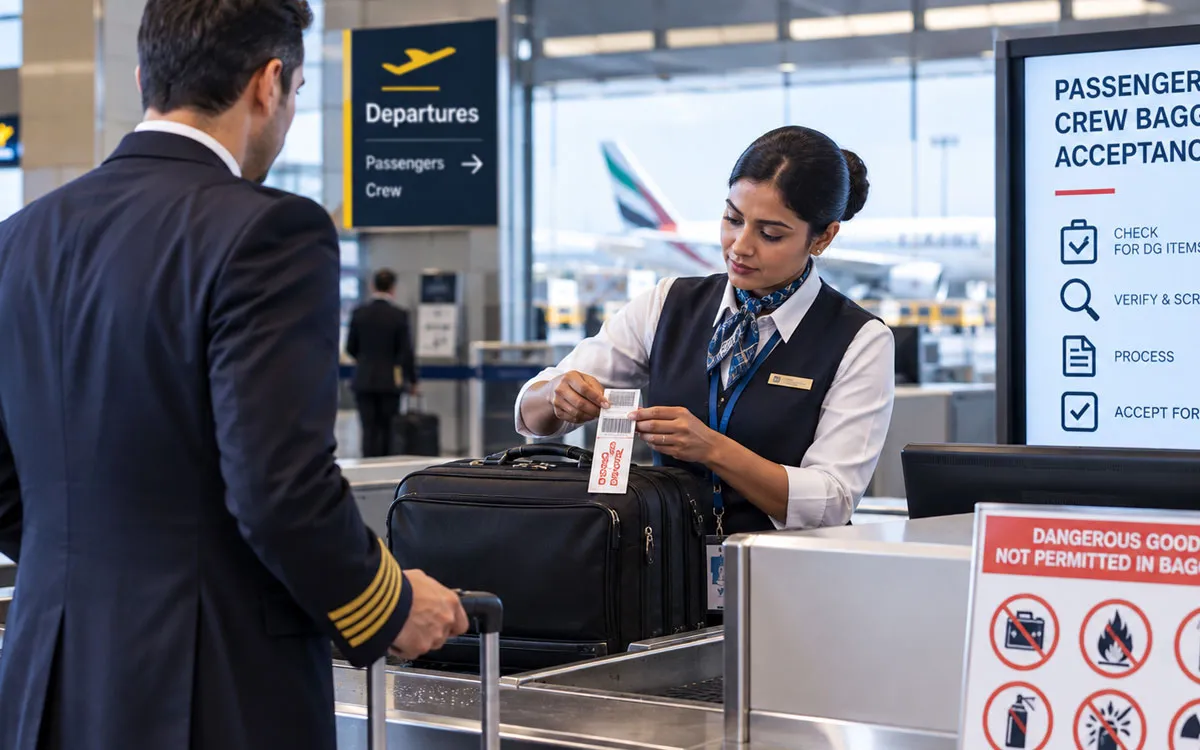
Dangerous Goods are items that may endanger the safety to health, property and the environment. Many of the daily use common items like perfumes, paint, dry ice, aerosols sprays, mobile phones and computers with batteries are Dangerous Goods. If not packaged or handled properly, these items can be very dangerous when transported by air and may cause a fire or the release of toxic fumes. The International Civil Aviation Organization (ICAO) and the Local Civil Aviation Authority regulations govern the carriage of Dangerous Goods onboard aircraft.
What are the Dangerous Goods courses available from Dangerous Goods Aviation Training Services?
DGR Aviation Training Services is approved by the UAE General Civil Aviation Authority to conduct the full range of Dangerous Goods courses, based on the current IATA Dangerous Goods Regulations and the Civil Aviation Regulations (CAR) Part VI Transport of Dangerous Goods by Air.
How do I know if my product is a Dangerous Goods?
The Regulations place this responsibility on the shipper. The classification criteria for each class and division of Dangerous Goods are stipulated in Section 3 of the Dangerous Goods Regulations. You may also find the name of the Dangerous Goods in Section 4 (blue page) of the regulations. When unsure, seek the advice from the manufacturer or distributor of the item. They should have the data sheet which would normally in most cases assist the shipper to determine if the substance is Dangerous Goods.
I have a shipment of electronic equipment containing lithium batteries, is it classified as a Dangerous Goods?
In general, yes. But there are many provisions to lithium batteries shipping. It may be fully regulated or excepted from certain requirements of the regulations.
Why did the airline rejected my cargo when I had done everything correct according to the regulations?
Ask the airline for the specific reason of their rejection. The airline may have their own policy on dangerous goods. IATA DGR 1.2.4 clearly mentioned that airlines are not obliged to transport a particular substance or product and they are free to impose requirements beyond and above the regulations.
Where can I get UN specification packaging?
Appendix E of IATA Dangerous Goods Regulations contains a list of companies that can supply the packaging you require.
Can I use any fiberboard box to meet the limited quantity provisions?
No! Although Limited Quantity packaging is not a UN specification packaging, you cannot use any packaging. When packed for transport, your packaging must be capable of withstanding a 1.2 meter drop test in a position most likely to cause the most damage, without leakage, and be capable of withstanding, without breakage or leakage a 24 hour stacking test. See IATA DGR Section 6.6 for Test Criteria for Limited Quantity Packaging.
Choosing a course
Do I need to know which GCAA course code applies before booking?
No. Tell us the job your staff actually do and we will name the function that covers it. The Course Finder does the same mapping online in a few clicks.
Can staff hold more than one function?
Yes. Many operational roles need more than one. Course bundles combine the functions most often booked together.
Certificates and assessment
How long is a dangerous goods certificate valid?
Twenty-four months from the date of issue. We flag the renewal window ahead of expiry so recurrent training is booked before the certificate lapses, not after.
What is the pass mark?
Eighty per cent. Assessment covers knowledge, skills and attitude in line with the GCAA competency-based approach, with distinction awarded at ninety per cent.
Is the certificate recognised outside the UAE?
Our courses are approved by the UAE General Civil Aviation Authority (GCAA). Recognition outside the UAE is subject to the civil aviation authority requirements, employer requirements, and operator policies of the country where the certificate will be used. Where an equivalent IATA competency exists, the relevant GCAA function is aligned with the corresponding IATA Dangerous Goods Regulations (DGR) competency requirements. Certain GCAA functions, including 4.1.A, 4.1.L and 4.1.M, are specific to the GCAA framework and do not have a direct IATA equivalent.
What happens if a certificate has already expired?
If the certificate has lapsed, the initial course is required rather than recurrent training. Send us the expiry date and we will confirm which applies before you book.
Delivery and booking
Can training be delivered at our own facility?
Yes. Any GCAA function can be delivered at your site across the UAE, on your shift pattern, using your own packaging, documentation and incident history as the worked examples.
How does booking work?
Every request gets a written response with course codes, durations, fees and the next available cohort dates — within one business day.
What are the entry requirements?
Participants must be able to converse efficiently in English, with full fluency in reading, writing and comprehension. Any applicable GCAA prerequisites must be fulfilled before registration.