Specialised course

Shipping Infectious Substances by Air

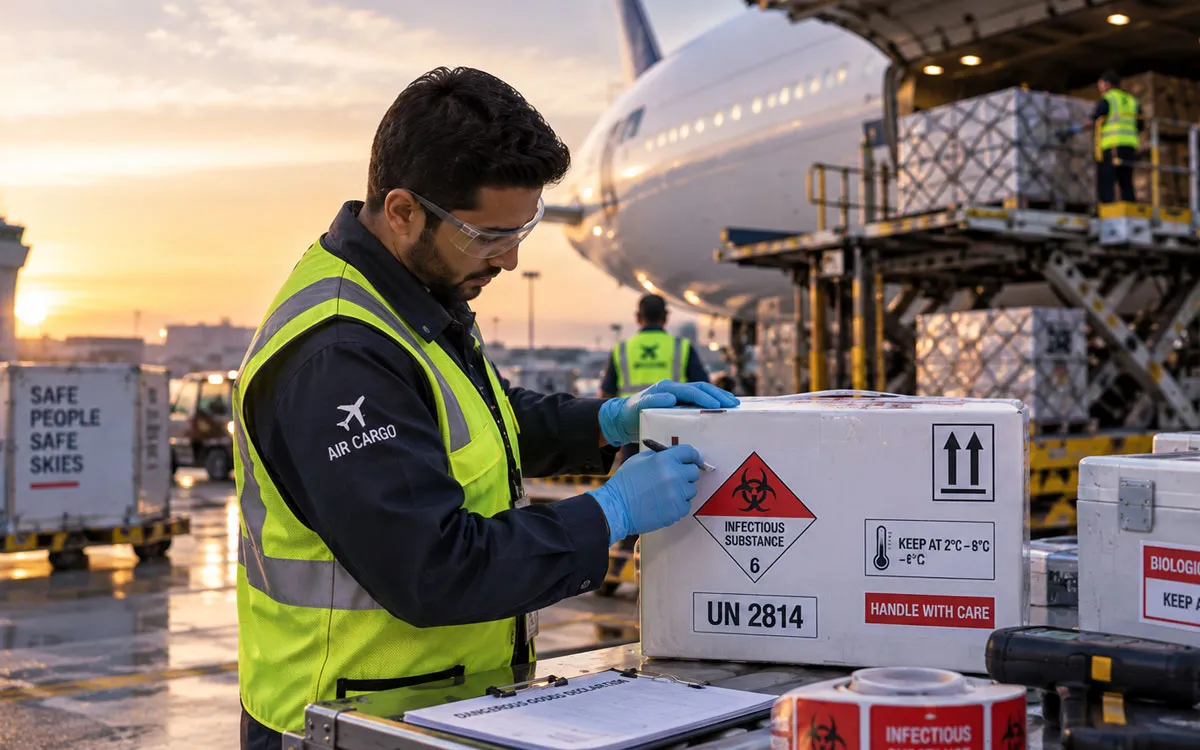
A specialised dangerous goods course for laboratories, hospitals and medical shippers preparing Category A and Category B infectious substances for air transport.

2 daysClass 6.2
Shipping Infectious Substances by Air training at DGR Aviation, Dubai

Home / Courses / Shipping Infectious Substances by Air

Course overview

Infectious substances are among the most tightly controlled consignments in air transport. Getting the category wrong, or the packaging, changes what may be carried and on which aircraft — and a rejected shipment can mean a lost sample, a delayed diagnosis or a spoiled trial batch.

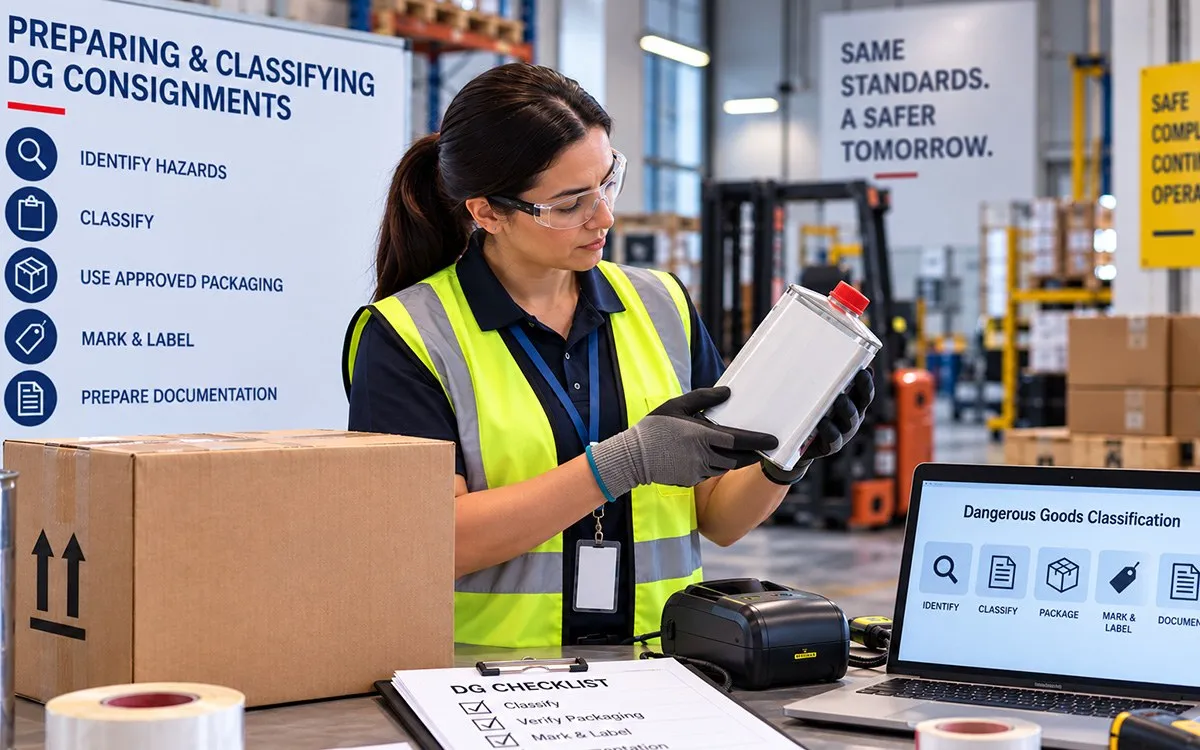
This programme works through classification, the triple packaging system, packing instructions P620 and P650, marking, labelling and the paperwork that must travel with the shipment, using the kind of consignments our participants actually send: patient specimens, cultures, clinical trial material and diagnostic samples.

Who should attend

  • Laboratory and diagnostic staff
  • Hospital and clinic shipping personnel
  • Pharmaceutical and healthcare shippers
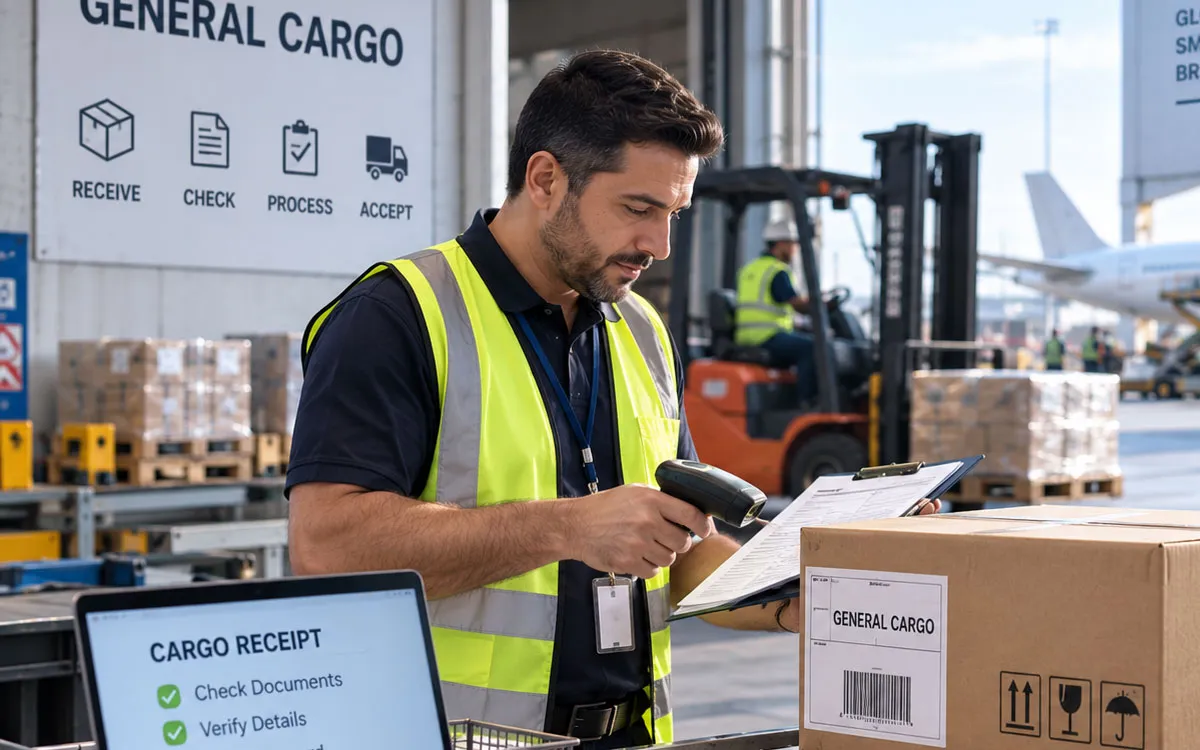
  • Freight forwarders handling medical consignments
  • Couriers moving patient specimens

What the course addresses

  • Classifying Category A (UN 2814, UN 2900) and Category B (UN 3373) infectious substances
  • Exempt human and animal specimens
  • Triple packaging requirements
  • Marking, labelling and documentation
  • Refrigerants, including dry ice, used with infectious substances

Course objectives

Upon successful completion, participants should be able to:

  • Distinguish Category A from Category B infectious substances
  • Classify consignments to UN 2814, UN 2900 and UN 3373
  • Recognise exempt human and animal specimens, and what still applies to them
  • Apply the triple packaging system to each category
  • Select and assemble packaging to packing instructions P620 and P650
  • Apply the correct marks and labels, including the UN 3373 mark
  • Prepare the Shipper’s Declaration where one is required
  • Apply the requirements for dry ice and other refrigerants used in the shipment
  • Recognise the handling of genetically modified organisms and medical waste
  • Identify State and operator variations affecting Category A consignments
  • Handle, store and segregate infectious substance consignments safely
  • Respond to a damaged package, leak or spill

How the course runs

TrainingDuration
Initial training2 days (16 hours)
Recurrent training2 days (10 hours)

Resources during training

Current year IATA DG Regulations Manual and the UAE Civil Aviation Regulations (CAR) Part VI Transport of Dangerous Goods by Air. DGR Aviation will provide these for the duration of the training.

Class activities

Simulation exercises on Category A and Category B infectious substances and all the exceptions, so participants progressively apply their knowledge and skills to prepare and accept the different types of infectious substances. A final assessment (theory and practical) on the last day of class assesses participants’ knowledge, skills and attitude in applying the Regulations.

Certificate awarded

A certificate is issued upon successful completion of the course. The certificate is valid for two years.

Customised / in-house training

For customised or in-house training, complete the enquiry form on this page.

Often taken with

About DGR Aviation

DGR Aviation Training Services LLC operates from Centurion Star Tower, Port Saeed, Deira, Dubai. We train aviation, cargo and logistics professionals in dangerous goods, at our own centre and at customer facilities across the UAE.

Training is delivered by approved instructors against the Competency-Based Training and Assessment framework, with the records kept so renewals can be flagged before a certificate lapses. Read our story →

Frequently asked

Who should take the infectious substances air transport course?
Personnel from the medical, pharmaceutical and aviation sectors involved in handling and shipping biological products containing blood and body fluids. In practice that means hospital and clinical laboratory staff, diagnostics and biobank teams, pharmaceutical logistics personnel, courier and forwarder staff, and cargo acceptance staff receiving these consignments.
How long is the infectious substances course?
Initial training runs 2 days (16 hours) and recurrent training runs 2 days (10 hours), delivered at the DGR Aviation centre in Port Saeed, Dubai, or in-house at your laboratory or logistics facility.
What is the difference between Category A and Category B infectious substances?
Category A substances are capable of causing permanent disability or life-threatening disease in otherwise healthy humans or animals, and carry the strictest packaging and documentation requirements. Category B substances do not meet that threshold and follow a lighter regime. The course works through both categories and the exemptions using simulation exercises.
Does the course cover dry ice and patient specimens?
The syllabus covers infectious substance packaging, marking, labelling and documentation requirements, and works through the exceptions that apply to different consignment types. Bring your specific shipping scenarios, such as refrigerated or exempt human specimens, to the session so the instructor can address them against the current regulations.
What does the syllabus cover?
The purpose and legal framework behind infectious substance regulations, mandatory training requirements, packaging requirements, marking and labelling requirements, and documentation requirements. Assessment is by theory and practical test on the last day of class.
Do laboratory staff need aviation training to ship samples?
Laboratory staff who classify, pack, mark, label or document infectious substances for air transport need dangerous goods training appropriate to their assigned responsibilities. This training is function-based; GCAA does not approve a separate course category specifically for infectious substances.
What certificate is issued?
DGR Aviation issues a certificate upon successful completion of the course, valid for two years. This is a course-completion certificate and not a separate GCAA-approved class certificate.
What reference materials are used?
The current-year IATA Dangerous Goods Regulations manual and UAE Civil Aviation Regulations (CAR) Part VI, Transport of Dangerous Goods by Air, supplied by DGR Aviation for the duration of the course.
Do our staff also need a GCAA function?
This is a specialised programme rather than one of the thirteen GCAA CBTA functions. Where staff also classify, pack or accept other dangerous goods, we will tell you which GCAA function covers that part of the job.
Can this course be delivered at our facility?
Contact us to arrange on-site delivery across the UAE. Get in touch.
How do I confirm this is the right course?
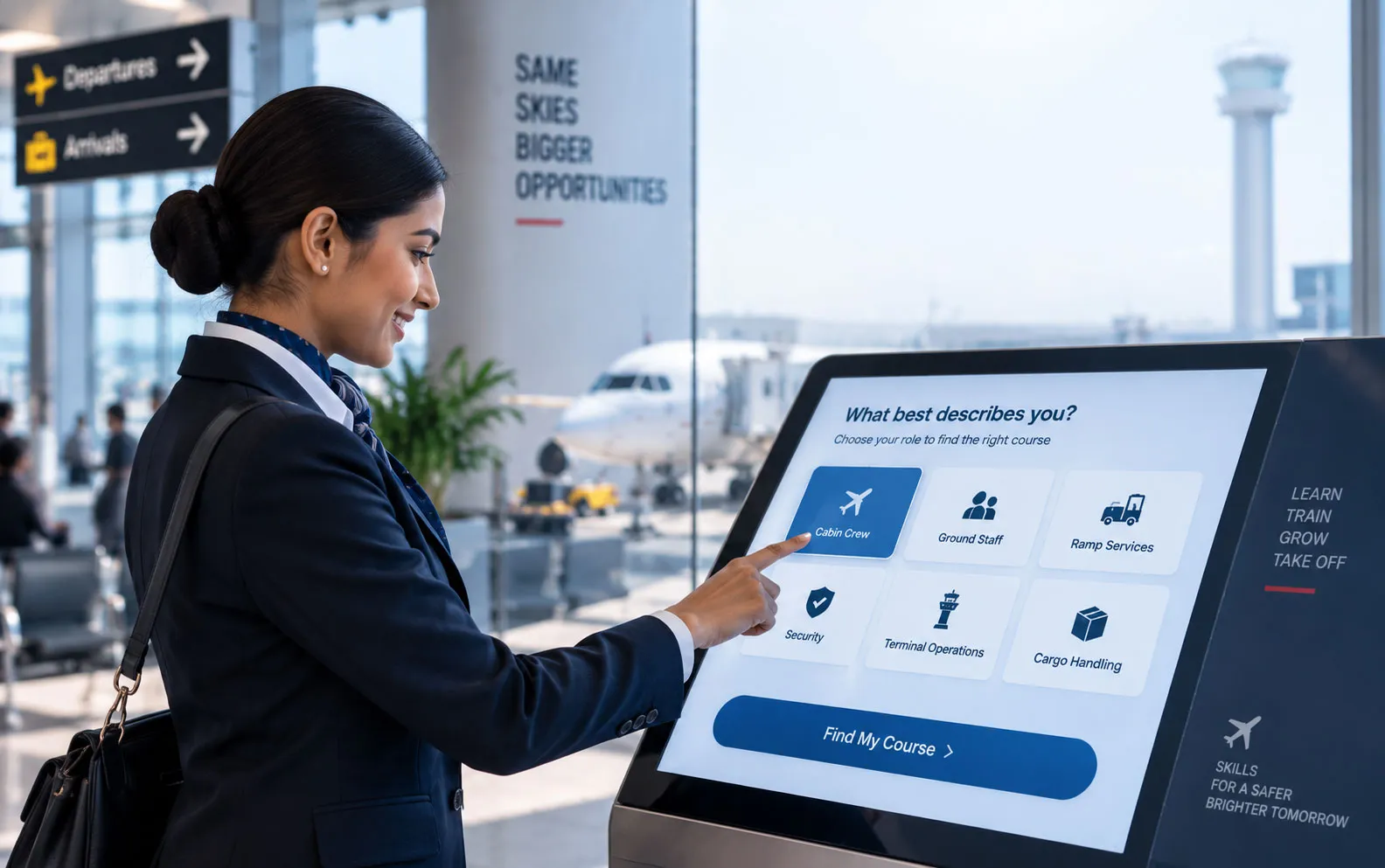
Use the Course Finder, or book a free demo class and we will advise on the functions your staff need.

Tell Us The Job Functions
We’ll Name The Course.

Join a free demo class with a GCAA-approved instructor. See how the training works and find the right course for every role — no obligation, no cost.

Free Demo Class

Join a free demo class with a GCAA-approved instructor. See how the course works, understand what your role needs, and ask your questions before you book.

Where *

Prefer the full page? Open the full form

Privacy

Cookie preferences

Strictly necessary

Always on

Required for the site to function — page navigation, form submission, security, and remembering this cookie choice. They store no marketing identifiers and cannot be switched off.

Analytics

Help us understand which courses and pages people look for, so we schedule the right cohorts. Aggregated and never used to identify you individually.

Marketing

Let us measure which adverts led to a training enquiry, and avoid showing you the same advert repeatedly. Set by our advertising partners.