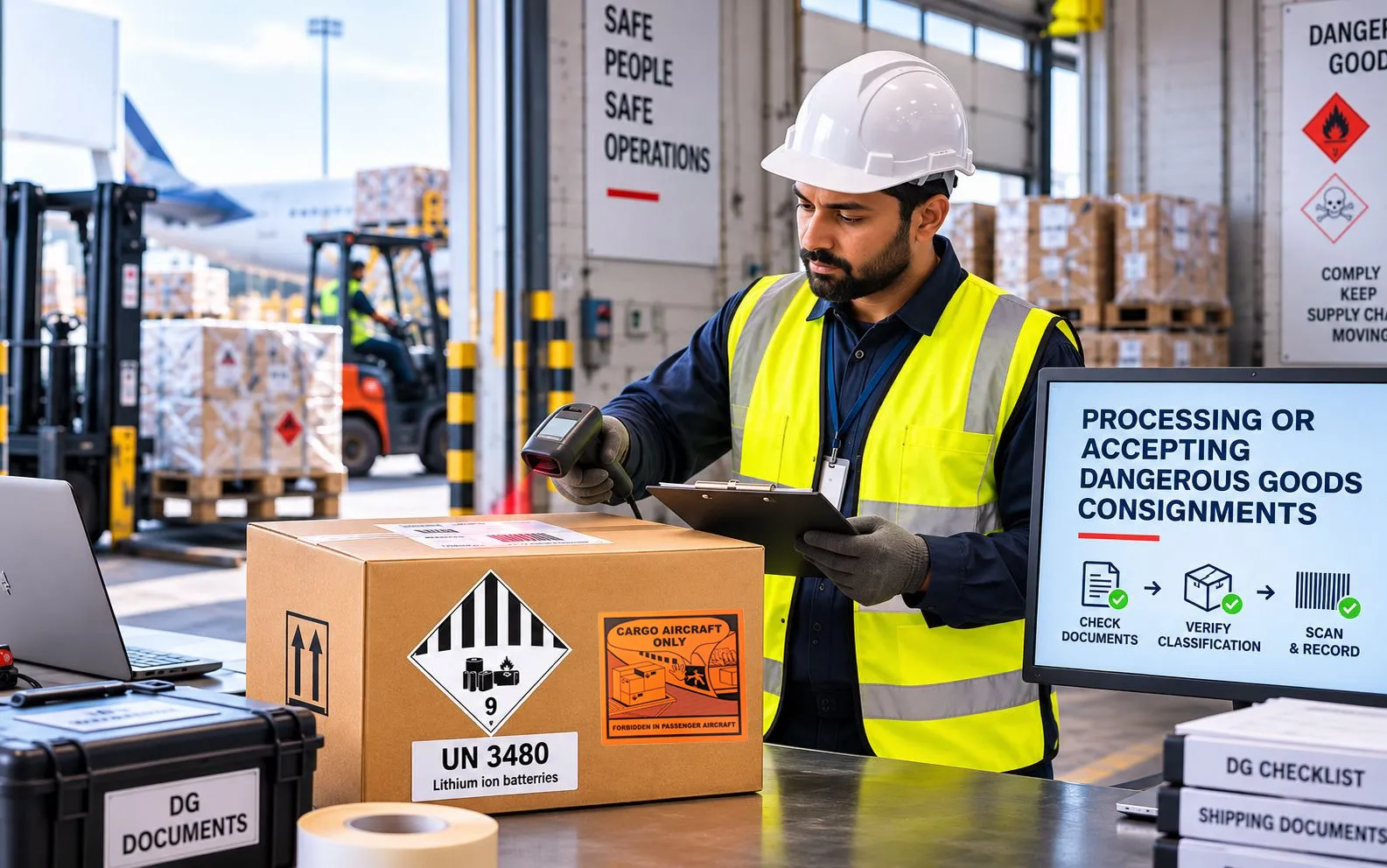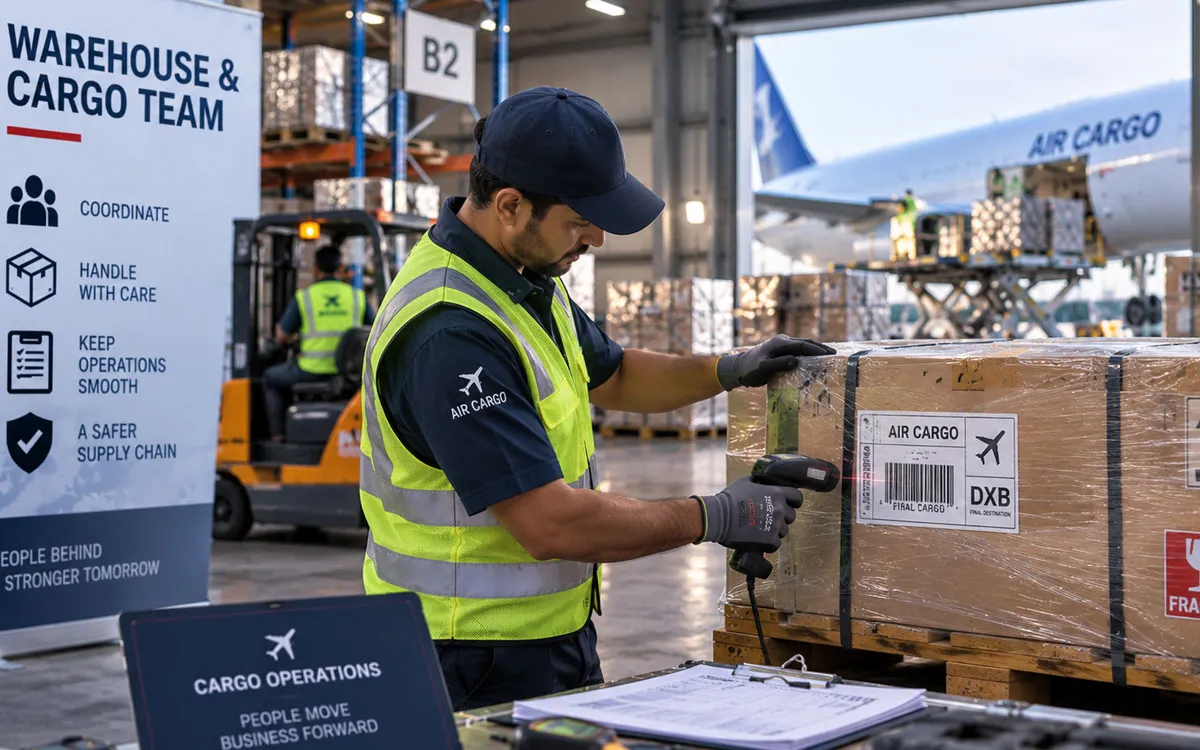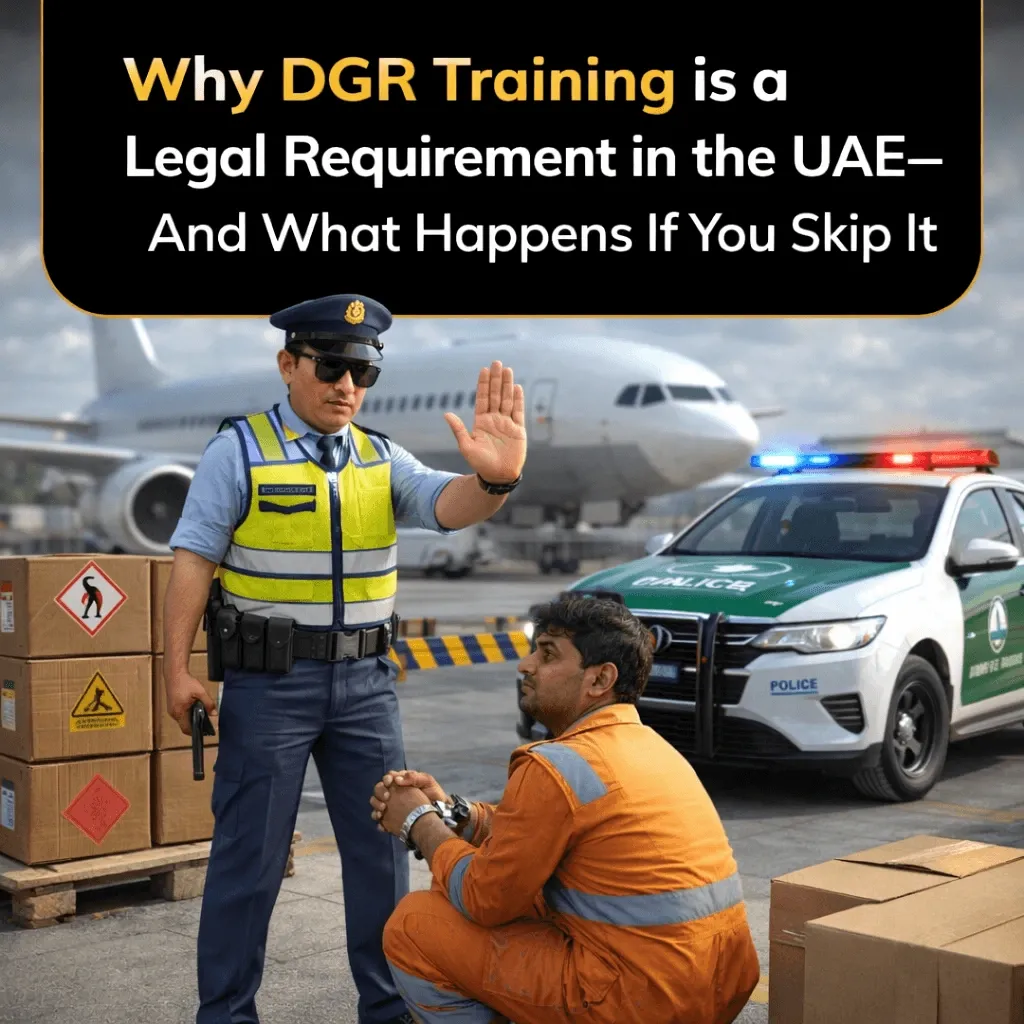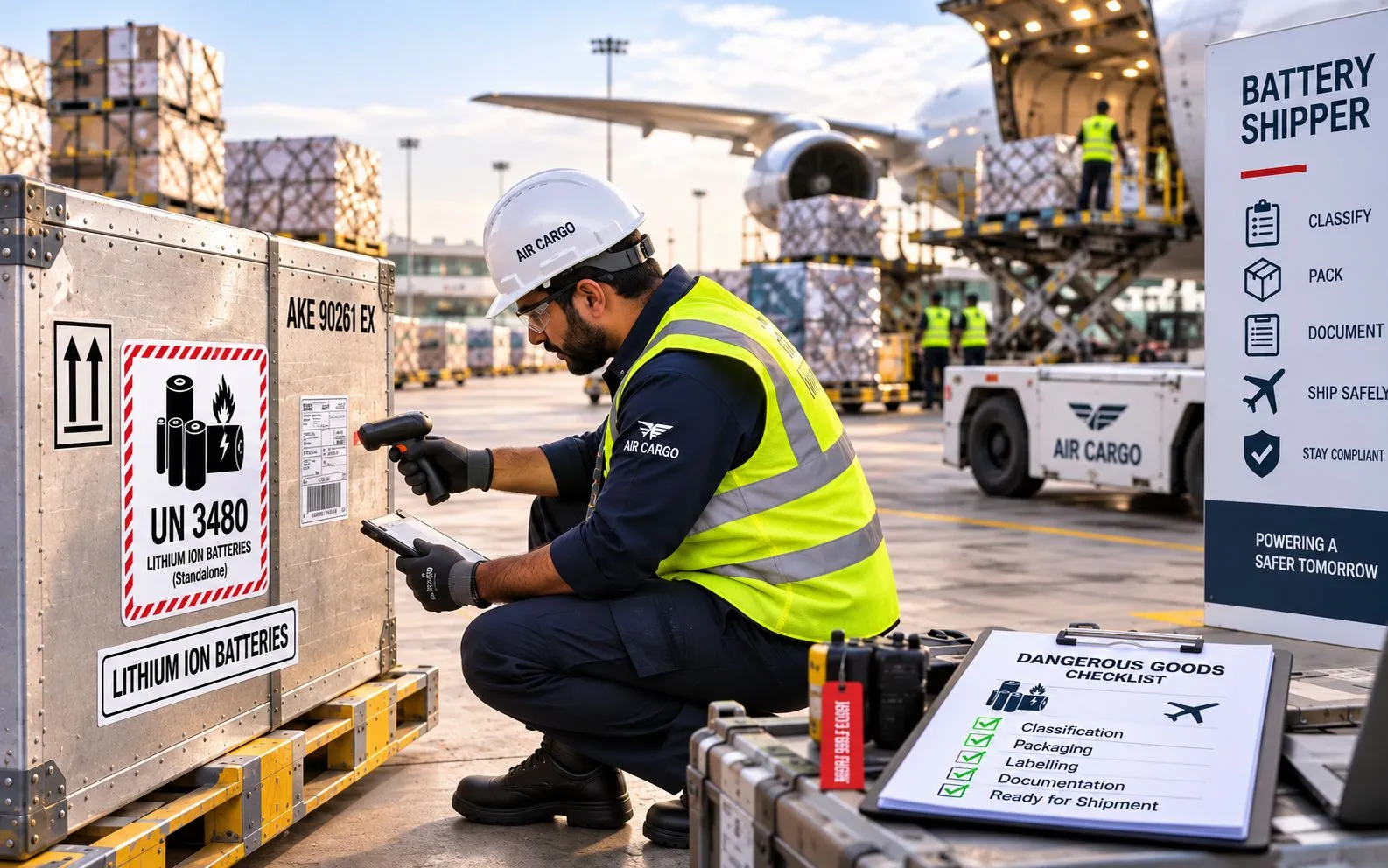
Any business that prepares dangerous goods for air transport from the UAE needs staff trained to classify, pack, mark, label and document those shipments. Under the GCAA’s CAR Part VI, this is Function 4.1.B, for shippers and packers. Businesses whose only dangerous goods are lithium batteries can train staff through a battery shipper dangerous goods course under Function 4.1.M. The GCAA also requires UAE-originating dangerous goods shipments to be tendered only to a GCAA dangerous goods certified entity.
Responsibility Starts With the Shipper
Every dangerous goods shipment begins with the shipper. If a product is classified wrongly, packed in the wrong packaging or documented poorly, every party further along the chain inherits the problem. Airlines and forwarders check consignments at acceptance, but the legal responsibility for preparing a shipment correctly rests with the shipper. That is why shipper training is a regulatory requirement, and why it matters as much to manufacturers and retailers as it does to logistics companies.
Who GCAA 4.1.B Training Is For
The GCAA defines Function 4.1.B as personnel preparing dangerous goods consignments for transport, with classification covered at the same time. The regulation describes them as shippers and packers. That includes staff at manufacturers and distributors preparing chemicals, aerosols, paints, flammable liquids and similar products, freight forwarder staff preparing dangerous goods on behalf of shippers, airline staff acting as shippers, and operator staff preparing dangerous goods as company materials. GCAA 4.1.B training corresponds to IATA function 7.1.A and to former IATA Categories 1, 2 and 3. At DGR Aviation, it is delivered in two parts, one on classifying dangerous goods and one on preparing dangerous goods shipments.
When Battery-Focused Training Is the Better Fit
Lithium batteries are among the most commonly shipped dangerous goods. They power phones, laptops, power tools, e-bikes and a vast range of consumer products. Many businesses, from electronics retailers and e-commerce sellers to repair centres, ship lithium batteries but no other dangerous goods. For them, a battery shipper dangerous goods course delivered under GCAA Function 4.1.M focuses on exactly what they need: how batteries are classified, packed, marked, labelled and documented for air transport.
| If your shipments include | Training that fits |
|---|---|
| A range of dangerous goods, such as chemicals, aerosols and flammables | GCAA 4.1.B training for shippers and packers |
| Only lithium batteries or products containing them | Battery shipper dangerous goods course (GCAA 4.1.M) |
| Both | GCAA 4.1.B training, which covers lithium batteries among other classes |
The 2024 Change for UAE Shippers
In revision 1.5 of CAR Part VI, dated 16 September 2024, the GCAA stated that the shipper shall ensure UAE-originating dangerous goods shipments are only tendered to a GCAA dangerous goods certified entity. In practical terms, shippers should confirm that the forwarders and handlers they work with hold the appropriate GCAA certification before handing over dangerous goods.
What Shipper Training Covers
Shipper training follows the life of a shipment. Trainees learn to identify the hazard class, UN number and proper shipping name of a product, then select packaging that meets the relevant packing instructions. They practise applying the correct marks and hazard labels and completing the shipper’s declaration accurately. Throughout, they learn the quantity limits that apply and the items that are forbidden for air transport, so they can recognise when a product cannot be shipped as planned.
Start With a Product Review
Before booking training, it helps to list the products your business ships by air and check their safety data sheets. Section 14 of a safety data sheet usually gives transport information, including whether a product is regulated as dangerous goods. This review shows which staff need training, which products need extra attention, and whether battery-focused training or full shipper training is the right choice.
High-Volume and E-Commerce Shippers
E-commerce businesses ship large numbers of small parcels, many containing electronics with lithium batteries. At this volume, small mistakes multiply quickly. Trained staff can build compliance into daily operations, from product setup to packing and labelling, so every parcel leaves correctly prepared and fewer shipments are held or returned.
Trained Shippers Move Faster
Shipments prepared by untrained staff are more likely to be rejected at acceptance, delayed or found non-compliant during inspection. Trained shippers give their forwarders complete and accurate information from the start, answer questions quickly and fix issues before cargo reaches the terminal. That shortens transit times and builds a reputation for reliable shipments, which matters most when capacity is tight. Because the IATA Dangerous Goods Regulations are updated every year, shippers should also keep training current, with recurrent training within 24 months.
Choosing a provider that is both GCAA approved and IATA accredited, with instructors who understand the products your business ships, makes training directly useful from the first day back at work.
Well-prepared shipments also protect your brand with customers who expect reliable delivery.
DGR Aviation Training Services LLC is a GCAA Approved Training Organisation and IATA Accredited training provider in Dubai, delivering GCAA competency-based dangerous goods training across functions 4.1.A to 4.1.M, from shippers and acceptance staff to warehouse teams and flight operations personnel. Our GCAA 4.1.B training and battery shipper dangerous goods course help businesses prepare compliant air shipments from the UAE.
Frequently Asked Questions
Who needs GCAA 4.1.B training?
Personnel who prepare and classify dangerous goods for air transport, including shippers, packers, forwarder staff acting for shippers and operator staff preparing company materials.
What is a battery shipper dangerous goods course?
Training focused on shipping lithium batteries and products containing them, delivered under GCAA Function 4.1.M.
What is GCAA 4.1.M training?
The GCAA function covering personnel who prepare lithium battery shipments for air transport.
Can a business that ships only lithium batteries take the battery course?
Yes, if lithium batteries are its only dangerous goods. Businesses shipping other classes need 4.1.B training.
Who can UAE shippers hand dangerous goods to?
Under CAR Part VI Rev 1.5, UAE-originating dangerous goods must only be tendered to a GCAA dangerous goods certified entity.