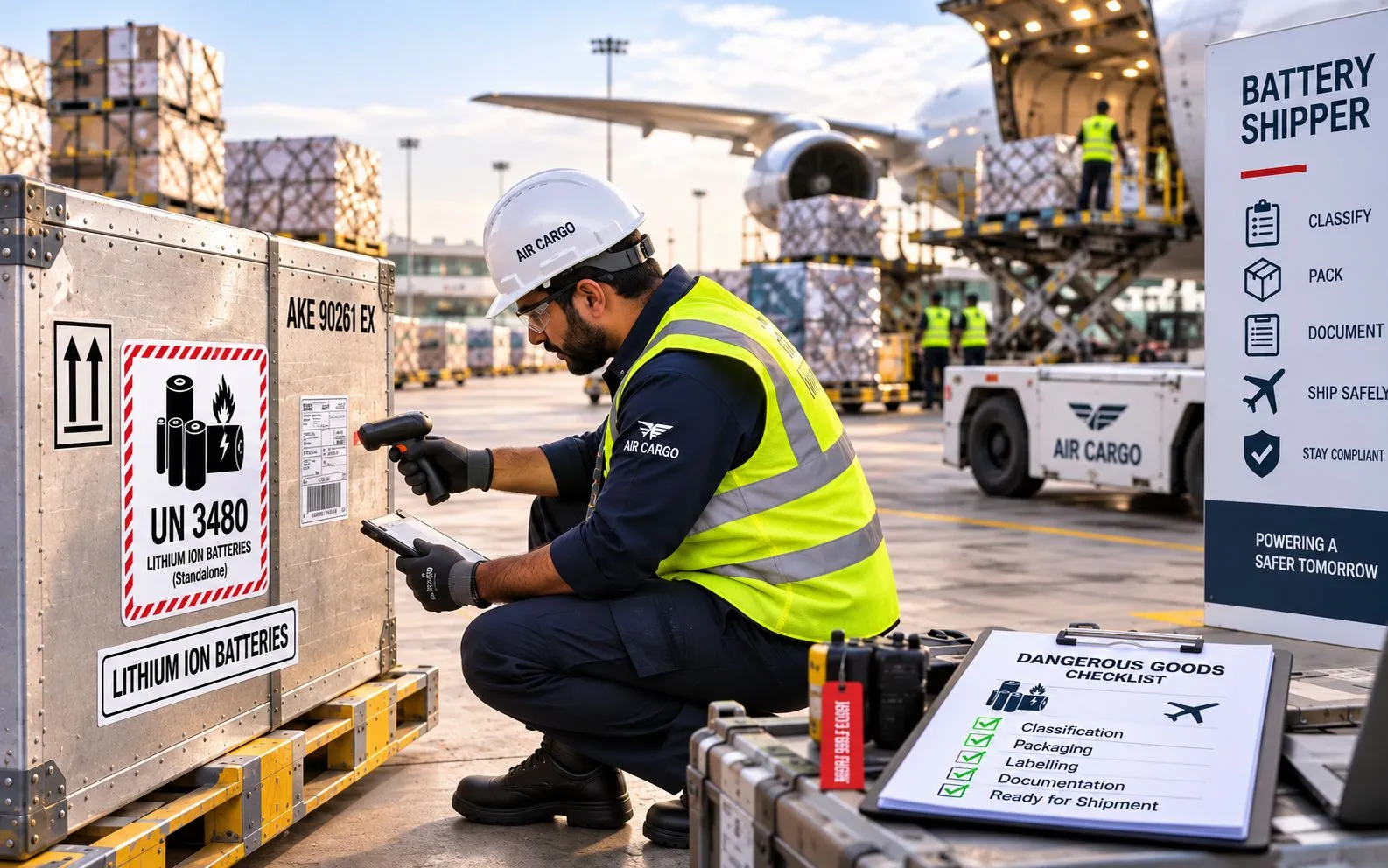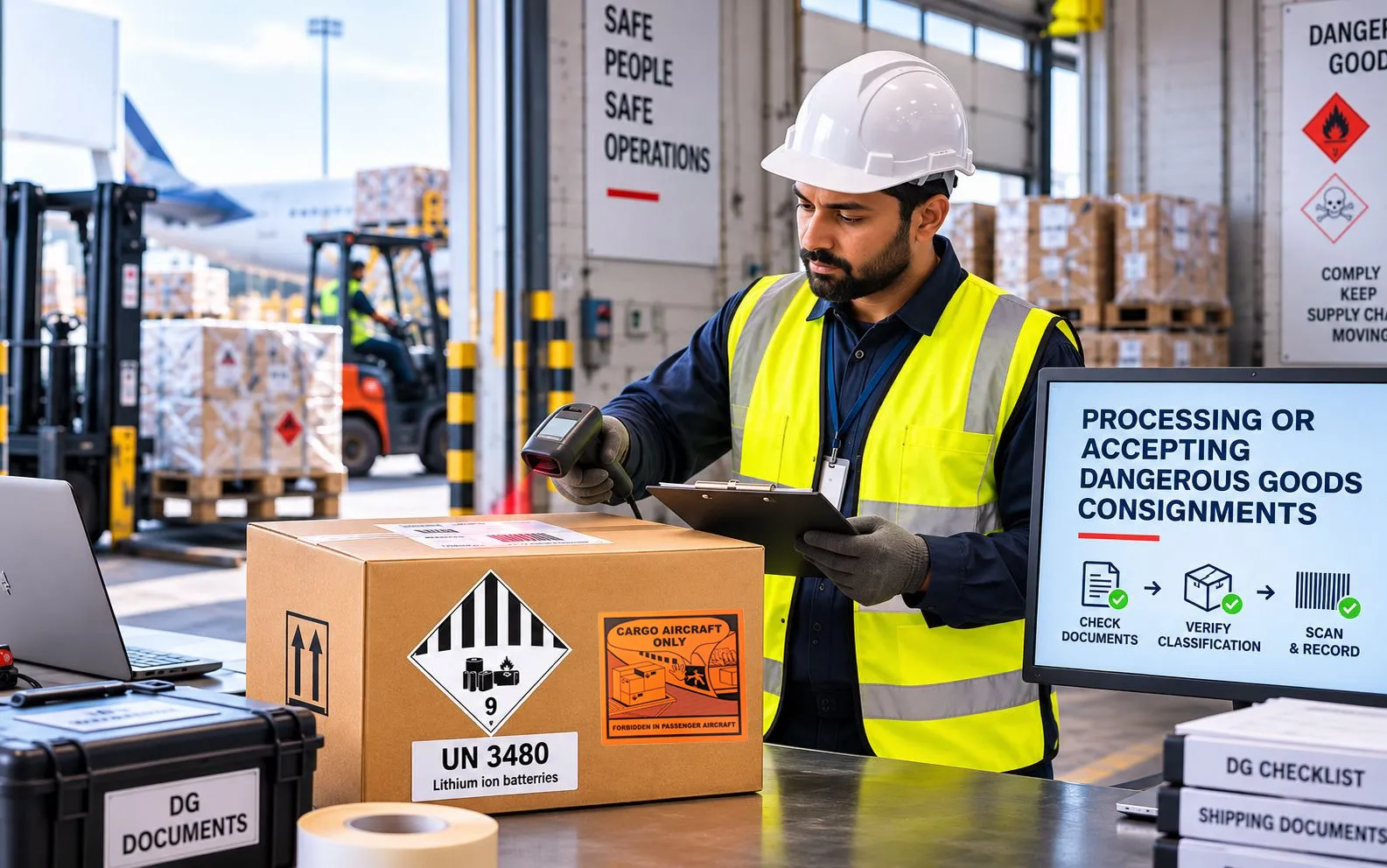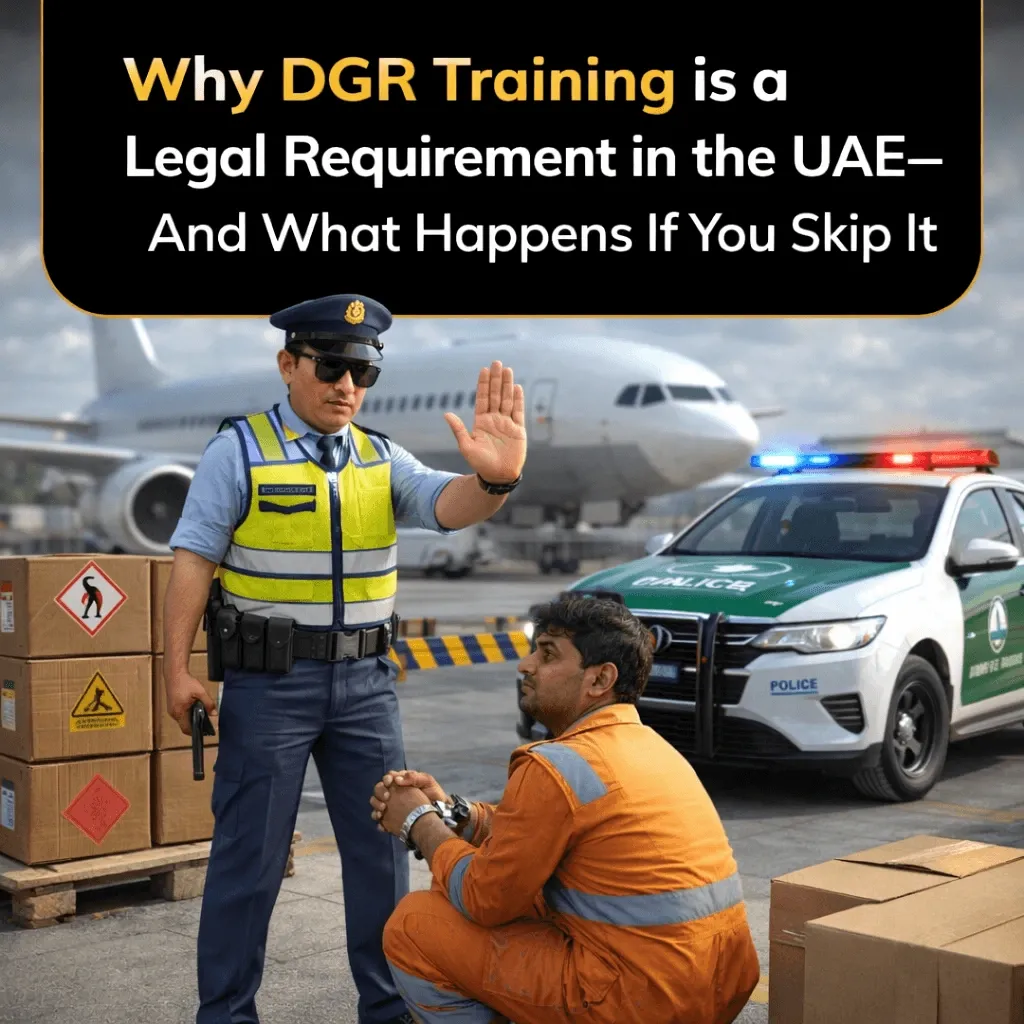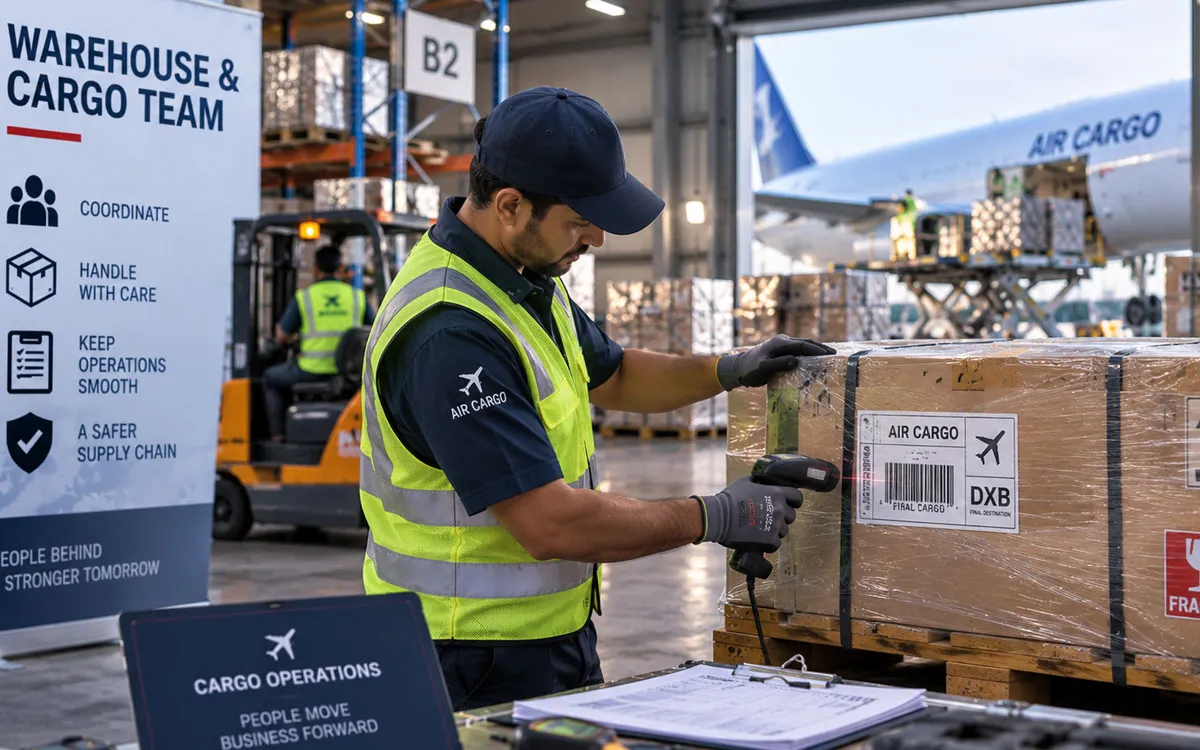
In UAE warehouses that handle air cargo, staff who handle, store and load dangerous goods need training matched to their role. Under the GCAA’s CAR Part VI, personnel handling and storing dangerous goods need GCAA 4.1.E training, while staff working under supervision to handle and store baggage, cargo or mail, and to load and unload ULDs and aircraft holds, need training for Function 4.1.L. Supervisors need the knowledge to oversee both.
Acceptance Is Only the Beginning
Air cargo warehouses at UAE airports, free zones and logistics parks move large volumes of freight every day, and some of it is dangerous goods. Even after a consignment has been correctly accepted, it can still be mishandled inside the warehouse. A package can be stored beside incompatible goods, loaded in the wrong position, damaged without anyone noticing, or lose its labels on the way to the aircraft. Warehouse dangerous goods training in the UAE gives staff the knowledge to recognise dangerous goods, handle them safely and respond correctly when something goes wrong.
Matching Training to Warehouse Roles
Different warehouse roles need different training, and the GCAA’s functions are built around what each person actually does.
| Warehouse role | Training that fits |
|---|---|
| Staff handling and storing dangerous goods | GCAA 4.1.E training |
| Staff working under supervision on handling, storage, ULD build-up and loading | GCAA 4.1.L training |
| Staff accepting dangerous goods consignments | GCAA 4.1.D training |
| Staff accepting general cargo | GCAA 4.1.C training |
Handling and Storage Under GCAA 4.1.E
GCAA 4.1.E training is for personnel responsible for handling and storing dangerous goods. It corresponds to IATA function 7.4.A and to former IATA Categories 5 and 8. The course teaches staff to read hazard labels, handling labels and marks, and to keep incompatible dangerous goods apart in storage. It covers safe handling, ULD build-up and loading into aircraft holds, and what to do when a package is leaking or damaged. Staff also learn how and when to report incidents and suspected undeclared dangerous goods.
Supervised Staff Under GCAA 4.1.L
Function 4.1.L is for personnel working under supervision who handle and store baggage, cargo or mail in an airport or warehouse, and who load and unload ULDs and aircraft cargo compartments. These team members need to recognise dangerous goods and know what to do if they find a damaged or leaking package, while working under the direction of trained supervisors. GCAA 4.1.L training gives them that essential knowledge without the depth required for handling and storage specialists.
The Supervisor’s Role
Supervisors direct teams, check that procedures are followed and respond to incidents. Good warehouse supervisor training courses combine dangerous goods knowledge, so supervisors understand the rules for every function they oversee, with leadership skills that help them guide people, enforce procedures and investigate problems. Supervisors set the standard on the warehouse floor, and investing in their development pays off in safer handling and fewer errors across every shift.
Building a Safety Culture Through Warehouse Staff Training
Effective warehouse staff training in Dubai goes beyond certificates. New joiners should receive dangerous goods awareness before they handle cargo, refresher sessions should reinforce key points, and clear procedures should be visible where people work. Every warehouse also needs a simple, well-rehearsed procedure for damaged or leaking dangerous goods: stop handling, keep people away, notify the supervisor and follow the emergency response guidance. Regular drills help teams respond calmly when it matters.
Mistakes Training Prevents
Most warehouse dangerous goods errors are preventable. Untrained staff may store incompatible goods together, miss or fail to report a leaking package, load dangerous goods in the wrong position or orientation, or continue handling packages whose labels have been damaged or removed. Each of these can lead to incidents, rejected loads or regulatory findings, and each is addressed directly in role-based training.
Staying Compliant as Teams Change
Recurrent training must be completed within 24 months under the IATA Dangerous Goods Regulations. Warehouses with high staff turnover benefit from a simple training matrix listing each role, the function it requires, and each person’s initial and recurrent training dates. A matrix like this keeps the team compliant and makes inspections and customer audits far easier, because training records can be produced quickly.
Inspections and Customer Audits
Warehouses that handle air cargo can be inspected by authorities and audited by airline customers. Inspectors and auditors look for trained staff, clear procedures, correct storage and segregation, and up-to-date training records. A well-trained team with documented procedures makes these visits straightforward and shows customers that their cargo is in safe hands.
When every role in the warehouse is trained for what it actually does, dangerous goods move through the building safely, efficiently and in line with the regulations, from the moment they arrive until they are loaded onto the aircraft.
DGR Aviation Training Services LLC is a GCAA Approved Training Organisation and IATA Accredited training provider in Dubai, delivering GCAA competency-based dangerous goods training across functions 4.1.A to 4.1.M, from shippers and acceptance staff to warehouse teams and flight operations personnel. Our warehouse dangerous goods training in the UAE, including GCAA 4.1.E and 4.1.L courses, prepares warehouse teams and supervisors to handle dangerous goods safely.
Frequently Asked Questions
Who needs GCAA 4.1.E training?
Personnel responsible for handling and storing dangerous goods in warehouses and cargo terminals.
What is GCAA 4.1.L training?
Training for personnel working under supervision who handle and store baggage, cargo or mail, and load and unload ULDs and aircraft holds.
Do warehouse staff need dangerous goods training in the UAE?
Staff who handle, store or load dangerous goods for air transport need training matched to their role under the GCAA’s CAR Part VI.
What should warehouse supervisor training include?
Dangerous goods knowledge for the functions supervisors oversee, plus leadership skills to guide teams and enforce procedures.
How often is warehouse dangerous goods training required?
Recurrent training must be completed within 24 months under the IATA Dangerous Goods Regulations.